Wireless Access point TP-Link- TL WA 601G Basic Specs TP-LINK
Wireless Access point TP-Link- TL WA 601G
Basic Specs TP-LINK TL-WA601G
Type: Wi-Fi access pointWireless standard:802.11a/b/g/n/ac, frequency 2.4 / 5-GHz, possibility of simultaneous operation ofSupport MIMO: Multiple-Input Multiple-Output (MIMO) technology is a wireless technology that uses multiple transmitters and receivers to transfer more data at the same time. All wireless products with 802.11n support MIMO, which is part of the technology that allows 802.11n to reach much higher speeds than products without 802.11n. yesMax. speed of the wireless connection:1750 Mbps
Reception/transmission TP-LINK TL-WA601G
Protection of information: WEP, WPA, WPA2Transmitter power:20 dBM
Options access point/bridge TP-LINK TL-WA601G
Switch:4xLANThe speed of the ports:1000 MB/sNumber of connectors USB 2.0 Type A:2Advanced features: file server, FTP server, UPnP AV serverGuest network: yesIPv6 Support: Internet Protocol version 6 (IPv6) is the most recent version of the Internet Protocol (IP), the communications protocol that provides an identification and location system for computers on networks and routes traffic across the Internet. IPv6 was developed by the Internet Engineering Task Force (IETF) to deal with the long-anticipated problem of IPv4 address exhaustion. IPv6 is intended to replace IPv4. yes
Router TP-LINK TL-WA601G
Router: yesFireWall: A firewall is a network security device that grants or rejects network access to traffic flows between an untrusted zone (e. g. , the Internet) and a trusted zone (e. g. , a private or corporate network). The firewall acts as the demarcation point or ?traffic cop? in the network, as all communication should flow through it and it is where traffic is granted or rejected access. Firewalls enforce access controls through a positive control model, which states that only traffic defined in the firewall policy is allowed onto the network; all other traffic is denied. yesNAT: The use of Network Address Translation (NAT) has been wide spread for a number of years; this is because it is able to solve a number of problems with the same relatively simple configuration. At its most basic, NAT enables the ability to translate one set of addresses to another. This enables traffic coming from a specific host to appear as though it is coming from another and do it transparently. This article looks at some of the basic concepts that are used when configuring NAT and reviews the configuration steps required to get NAT working. yesSPI: Serial Peripheral Interface (SPI) is a synchronous serial data protocol used by microcontrollers for communicating with one or more peripheral devices quickly over short distances. It can also be used for communication between two microcontrollers. yesDHCP server: Dynamic Host Configuration Protocol (DHCP) is a client/server protocol that automatically provides an Internet Protocol (IP) host with its IP address and other related configuration information such as the subnet mask and default gateway. RFCs 2131 and 2132 define DHCP as an Internet Engineering Task Force (IETF) standard based on Bootstrap Protocol (BOOTP), a protocol with which DHCP shares many implementation details. DHCP allows hosts to obtain necessary TCP/IP configuration information from a DHCP server. yesSupport for Dynamic DNS: yesDemilitarized zone (DMZ): In computer networks, a DMZ (demilitarized zone) is a physical or logical sub-network that separates an internal local area network (LAN) from other untrusted networks, usually the Internet. External-facing servers, resources and services are located in the DMZ so they are accessible from the Internet but the rest of the internal LAN remains unreachable. This provides an additional layer of security to the LAN as it restricts the ability of hackers to directly access internal servers and data via the Internet. yesStatic routing: yes
VPN TP-LINK TL-WA601G
Support for VPN pass through: yes
Antenna TP-LINK TL-WA601G
The number of external antennas:3 x 5 dBiExternal antenna type: removableThe number of internal antennas:3
Monitoring and configuring TP-LINK TL-WA601G
Web-interface: yes
Detailed Specs TP-LINK TL-WA601G
Interface built-in print server: USBDimensions (WxHxD):243x32x160 mmAdditional information: WDS mode
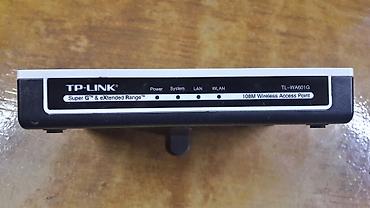
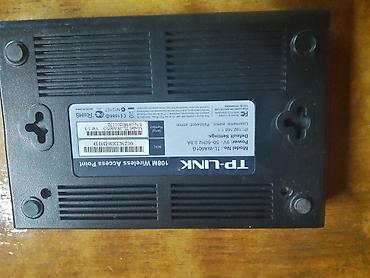
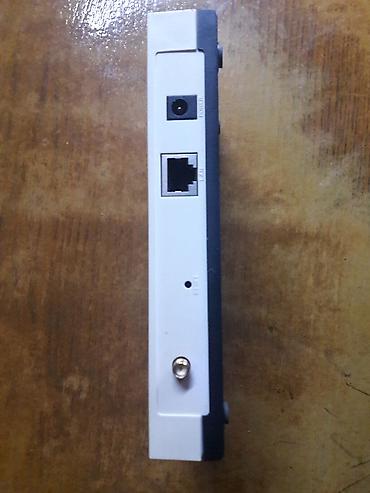
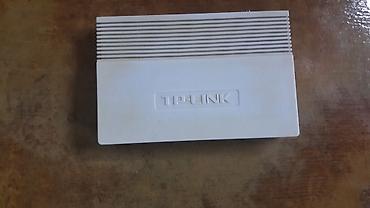
uredjaj je stigao iz inostranstva, potpuno je ispravan, stanje kao na slikama, bez adaptera.